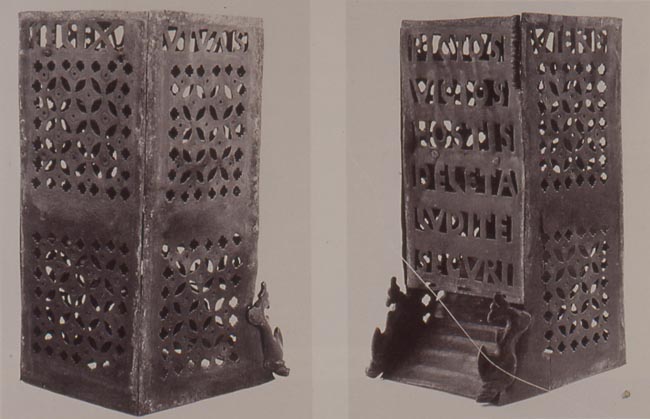
Alea Iacta Est

Devices to ensure fair play in dice games go back a long way. The Greeks and Romans used devices like internally-ridged dice cups to make sure game players couldn't unfairly control the spin and roll of the dice.

And, of course, they invented the dice tower. The earliest known dice tower is a 4th century item found near Cologne.


I started playing with a 3d-printed implementation of it a while back, forgot, was reminded of it, and finally got around to finishing.
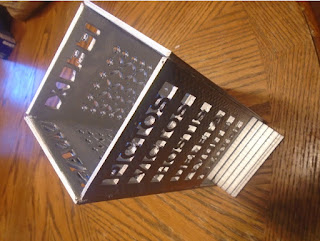

It's not a perfect implementation. It lacks the pine cones of the original (not included in the picture above), nor the little bells, nor the dolphins, but those can be added easily. It isn't hinged like the original (Lightweight PLA hinges? Nah.). And the steps appear to go up a bit higher in the original. Still, it gets the job done and looks reasonably Roman.


And for anyone interested in making their own, I've put the files on Thingiverse.


Comments

Charles Saeger said…
This comment has been removed by the author.
Charles Saeger said…
This comment has been removed by the author.

Popular posts from this blog

Spaced Out Rides

(This is the kind of thing I'd have sent into Pyramid   back in the day, but that's not an option now, so here we are.)   The GURPS Action series is the gift that keeps on giving for a lot of modern-and-later gaming. GURPS Action 2: Exploits has rules for sneaking around, running away, and all kinds of other activities which can be easily transplanted to cyberpunk and other high-tech settings. GURPS Action 6: Tricked-Out Rides provides more of the same for its topic, giving an easy framework for describing and even designing common types of vehicles without all the math and paralysis-by-analysis of GURPS Vehicles. Pick a standardized vehicle type (van, compact car, etc.) and apply modifiers (rugged, tinted windows). But, of course, it’s limited. It’s just ten pages, after all, so it’s great for common passenger vehicles for the modern(ish) era. But higher-tech vehic...

G$ --> DND GP

A GURPS $ is worth 1.27 D&D 5e SP, which is interesting because in GURPS Dungeon Fantasy, the typical $1 coin is a silver piece. And a D&D GP is worth about $7.87 in GURPS. So, where does that come from? A while back, I cautioned someone considering using (among other things) GURPS Renaissance Venice: Merchants of Venice  in a non-GURPS game that prices listed in the extensive lists of trade goods were expressed in GURPS $, which might not have obvious conversions into other game systems. But if one wanted to convert GURPS prices into D&D or vice versa, how would that work? It crossed my mind to take a "basket of goods" approach. Economists measure inflation not by picking a single commodity, like the price of gold or oil or wheat, and seeing how that changes over time, but by taking the combined value of a set of common commodities. This provides a more comprehensive picture of the cost of living. Perhaps gas becomes less expensive while the price of whe...

2020 GURPS Challenge PDFs: Incense Trail prices

Over on the forum, somebody asked me how much frankincense and myrrh cost in antiquity. Well, we don't know. We never get as much price information as we like out of history. There's the occasional mention of this or that product being worth its weight in silver or gold, but we can reasonably believe that those are descriptions written by political, cultural, or philosophical commentators trying to give an idea of how expensive things are, not people who have actually done an economic analysis and discovered that the material in question is, by coincidence, exactly the same value as silver or gold and not, say, one and a half times the price of silver or three quarters of the price of gold. We know it was valuable, but not how valuable on the level of individual purchases. But for the convenience of the GM, we can use those comparisons to establish some ballpark figures. Mind you, this is based largely on GURPS rather than historical sources, so it's not something I would h...